
Why our consultation process is different—and why that matters for your skin.
There is a reason the word medical is in medical aesthetics. And yet, somewhere along the way, aesthetic consultations became very focused on one question:
“So… what treatment are you interested in today?”
That is not how we practice at Skin! When you come to us, I do not just want to know that you are bothered by your pigmentation, your acne scars, your under-eyes, or the fact that your face suddenly looks different than it did five years ago. I want to know you.
Your medical history. Your surgical history. Your medications. Your allergies. What you have already tried. What worked. What absolutely did not. What your skin is doing at home. How much time you realistically have for a skincare routine. Whether you can tolerate downtime. What your goals are. And, equally important, what your goals are not. Because all of those things can affect what I recommend.
We are a physician-led medical aesthetics practice, and that changes the way we approach your care.
Every new patient at Skin! begins with a virtual assessment. This is not busywork. It is how we start collecting the information we need before your in-person consultation. We ask about your medical and surgical history, medications, allergies, previous aesthetic treatments, skincare, current concerns, and what you are hoping to improve.
You also send us photographs so we can get an initial look at your skin and facial anatomy. By the time you walk into the office, we are not meeting your skin for the first time. We already have context.
That means your consultation can be spent actually consulting—not using half of the appointment trying to remember which laser you had three years ago or whether that serum that made you peel was retinol or glycolic acid. We can start connecting the dots.
See it for yourself
What does a written virtual consult actually look like?
Here’s a shortened sample, written for a fictional patient asking about Avéli.
One of the biggest differences in the way we practice is that we are generally not thinking about your face or skin one appointment at a time. We are thinking:
And sometimes: What should we leave completely alone?
If you come in concerned about acne scarring, for example, the answer may not simply be, “Book microneedling.” We may need to address active acne first. We may need to improve your skin barrier. We may need to treat residual redness or pigmentation. Your scars may include several different types that require different approaches.
The final plan might include skincare, microneedling, laser, injectable treatments, or a combination of therapies performed in a very specific order. Or it may not. That is the point.
The treatment should follow the assessment. The assessment should not be reverse-engineered to sell you a treatment.
This is one of the things I probably repeat most often in consultations: What you do at home matters more than what we do to you once a month.
I think of it roughly as an 80/20 relationship. Your daily skincare, sun protection, consistency, habits, and compliance are the foundation. The treatments we perform in the office are the 20% that can accelerate, amplify, or address things your home routine simply cannot.
A laser cannot compensate for a terrible skincare routine. Microneedling cannot outwork daily unprotected sun exposure. And buying an expensive serum does not mean much if it is the wrong product for your skin and you use it twice a week because it burns every time you put it on.
So when we build your plan, we look at both pieces. What are you doing every day, and what do we actually need to do in the office? They should work together.
There is a very intentional reason we spend so much time educating our patients. I do not want you blindly following instructions because someone in a white coat told you to. I want you to understand:
Education gives you ownership over your care. And when you understand the plan, you are much better equipped to make good decisions about your skin six months from now, a year from now, and ten years from now.
My goal is not to make you dependent on us to tell you what to do forever. My goal is for you to become very, very good at understanding your own skin.
This is also why we brought the Aura Reality 3D skin imaging system into the practice. There is certainly a role for experience and clinical judgment in aesthetics. There always will be. But when we have the ability to gather more information, I want it.
Aura allows us to take a deeper look at things like pigmentation, redness, texture, pores, lines, and facial changes. It gives us standardized imaging and measurements that we can use alongside your history and examination. And perhaps even more importantly, it gives us a baseline.
Because starting a treatment plan is only half of the process. We also need to answer: Is it working?
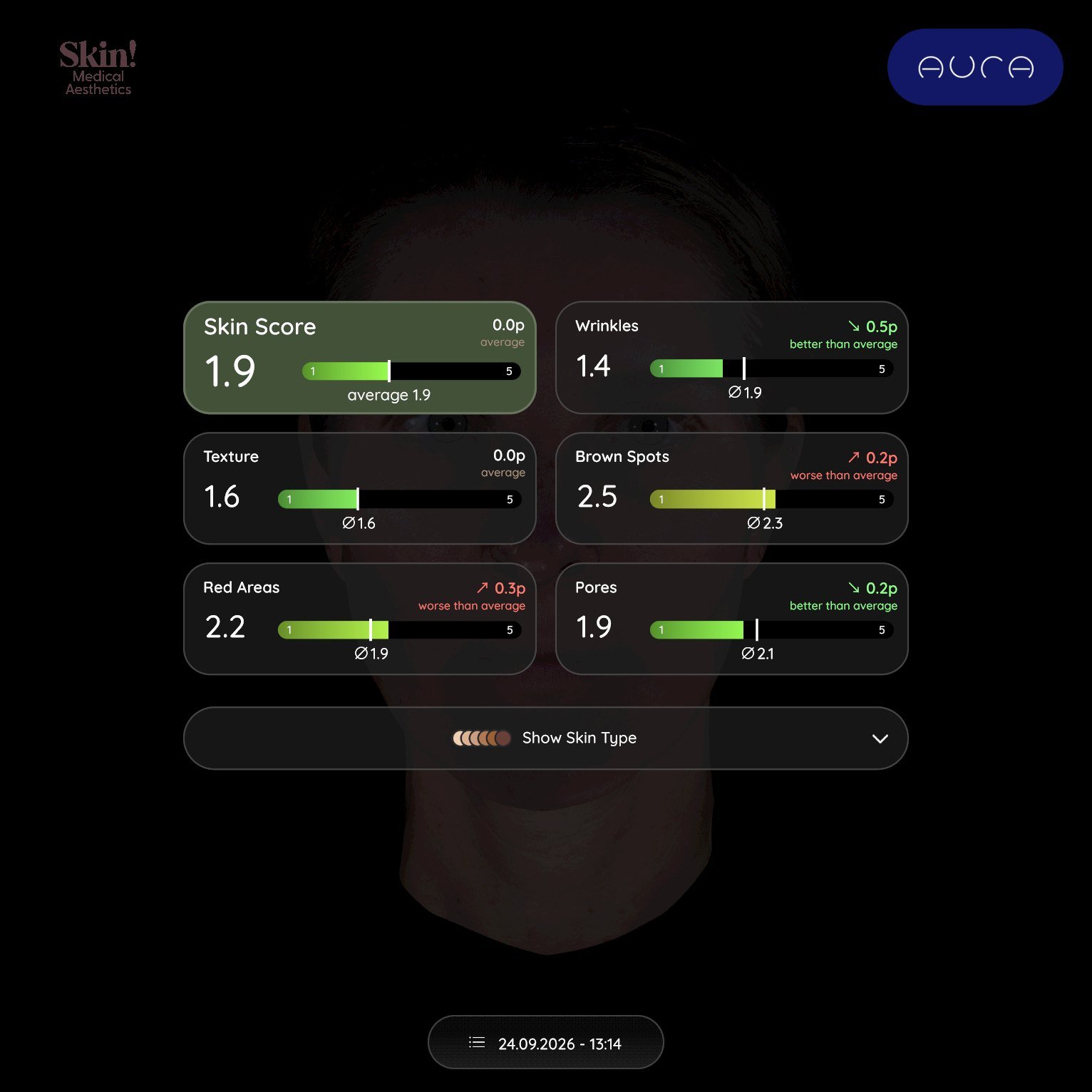
This is really the philosophy behind how we practice.
We assess. We gather your history. We examine you. We look at your skincare. We review your concerns. We use imaging when it is helpful. We decide what deserves priority.
We create a plan. Not a random collection of treatments. A plan with an order, a purpose, and realistic expectations.
We treat. Then we give the treatment an appropriate amount of time to work.
And then: We reassess. We take new photos. We repeat Aura imaging when appropriate. We compare. We talk about what you have noticed. We look at what has changed and what has not.
And if something is not working the way we expected? We do not just keep doing it because that is what was originally written on the plan. We change course. That may mean changing your skincare. Choosing a different technology. Adjusting timing. Giving your skin more time. Or deciding that the original goal needs a different approach altogether.
A good plan has a purpose, an order, and checkpoints.
Being a medical practice also means we are comfortable telling you when we think you should wait. Sometimes your skin barrier needs to heal before we treat it. Sometimes we need to get acne controlled before addressing the scars it left behind. Sometimes the treatment you saw on Instagram is not appropriate for your skin. Sometimes the thing you are asking me to inject is not actually the thing creating the problem you are seeing.
And sometimes you simply do not need what you came in asking for. That is still a successful consultation. You should never have to leave an aesthetic appointment with something injected, lasered, peeled, or purchased for the appointment to have been worthwhile.
Sometimes the most useful thing we can give you is clarity.
Probably not everyone. If you are looking to walk into an office, point to a menu, choose a treatment, and be out the door, our process may feel like a lot.
But if you are someone who wants to understand what is happening with your skin…
You are probably our kind of patient.
There are incredible tools available to us in aesthetics: lasers, microneedling, biostimulators, injectables, chemical peels, prescription skincare, and technologies that did not exist even a few years ago. But having more tools does not automatically create better outcomes.
The hard part is knowing which tool to use, on whom, when, and why. That starts with a real assessment. Then we make a plan. Then we measure. Then we reassess.
That is what medical aesthetics means to us. And that is how we take care of our patients at Skin!
Your skin deserves a plan—not a random treatment.
Keep reading