
Melasma, managed properly.
Melasma is the one pigment condition that punishes aggressive treatment. Our protocol is built to quiet it and keep it quiet — the right devices at the right settings, real sun strategy for Denver's altitude, and a maintenance plan you can actually live with.
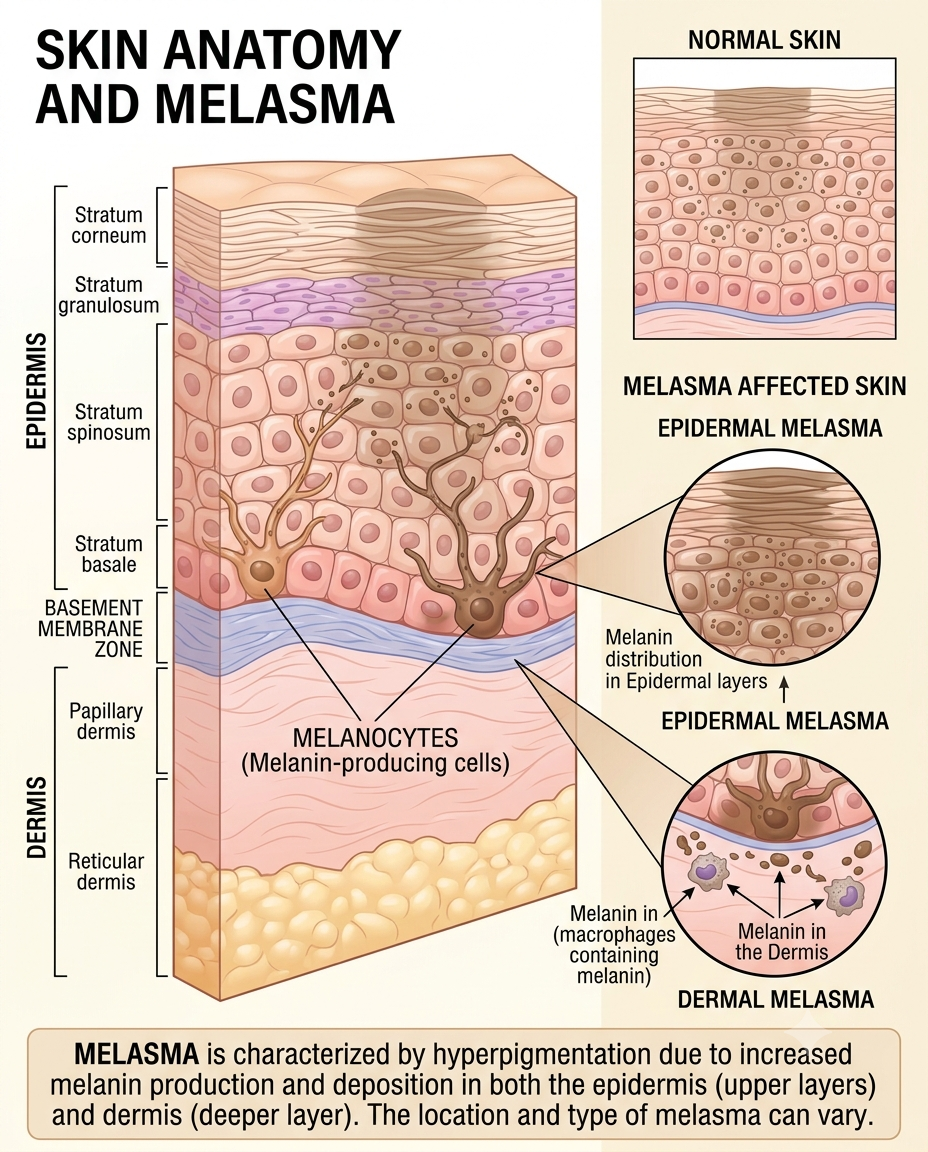
Melasma isn't a stain. It's an overactive system.
In melasma, the pigment-producing cells in your skin aren't damaged — they're hypersensitive. Heat, UV, visible light, hormones, and inflammation all switch them on, and once switched on they stay loud.
That single fact explains almost everything patients find frustrating about melasma. It explains why it fades in winter and roars back in June. Why it returned after a pregnancy, or after starting birth control. And why the aggressive laser that erased someone's sun spots made a friend's melasma dramatically worse — heat is a trigger, so heat-heavy devices can feed the exact process you're trying to calm. A melasma protocol isn't about blasting pigment off the surface. It's about lowering the volume on the cells producing it, clearing what's already there gently, and then defending the result. Denver makes that last part harder than it is at sea level, which is why our plans put more weight on it than most.
Suppress it. Clear it. Defend it.
Every melasma plan we build runs through the same three phases, in this order. Skipping straight to clearing is the single most common reason melasma comes back worse than it started.
Calm the trigger
Before we treat anything we lower pigment production with prescription-strength topicals and a real sun strategy. Moderate to severe cases often also need oral tranexamic acid (TXA), which reduces pigment production systemically and is one of the most useful tools we have for stubborn melasma. Treating an actively flaring melasma is how you make it angrier, so this phase isn't optional and it isn't filler.
Clear what's there
Once production is suppressed we clear existing pigment with low-heat, melasma-appropriate tools — gentle laser passes and carefully chosen peels, spaced out and dialed conservatively rather than pushed for a fast result.
Hold the line
This is the part we want you to hear clearly: melasma cannot be cured, only suppressed. There is no treatment that permanently switches those pigment cells off. What maintenance does is keep them quiet — a simplified routine, seasonal adjustments, and periodic touch-ups timed around Colorado's UV curve. Patients who stay on maintenance hold their result. Patients who stop, don't.
Where melasma shows up, and why it matters.
The pattern on your face tells us how deep the pigment sits and how it's likely to respond — which is the first thing we sort out at your consult.
Cheeks, Nose & Forehead
The most common pattern: broad, symmetrical patches across the central face that darken every summer.
Cheekbones Only
Pigment confined to the upper cheeks, often the first area to respond and the first to relapse.
Along The Jawline
A jaw-hugging pattern that tends to appear later and is more strongly linked to cumulative sun exposure.
The Mask of Pregnancy
Melasma that arrived with pregnancy, birth control, or HRT — and often needs the hormonal driver addressed alongside the skin.
The Shadow
The moustache-pattern darkening that reads as shadow in photos and is stubbornly resistant to over-the-counter fixes.
Melasma Plus Sun Damage
Most Denver patients have both, and they need genuinely different treatments — so we separate them before we start.
That's the consult.
Melasma, sun damage, and post-inflammatory pigment can look nearly identical and respond in opposite directions to the same laser. Getting the diagnosis right is most of the work.
Start with a free consultDenver is a harder place to have melasma.
At 5,280 feet, UV intensity runs meaningfully higher than at sea level, and we get roughly 300 sunny days a year to go with it.
That combination is why melasma protocols copied from a coastal practice tend to underperform here. Snow reflects UV back up at your face through the winter, so the seasonal break most patients count on never fully arrives. Visible light — including the light coming off your screens and through your car window — triggers melasma too, which is why we push tinted mineral SPF with iron oxides rather than any sunscreen you happen to like. None of this is glamorous. It is, quantifiably, the part of the plan that determines whether your result lasts through August.
The treatment clears it. The defense is what keeps it clear.
What's actually in the protocol.
Notice what's missing: aggressive resurfacing. Melasma is the one concern where restraint outperforms intensity, and our tool selection reflects that.
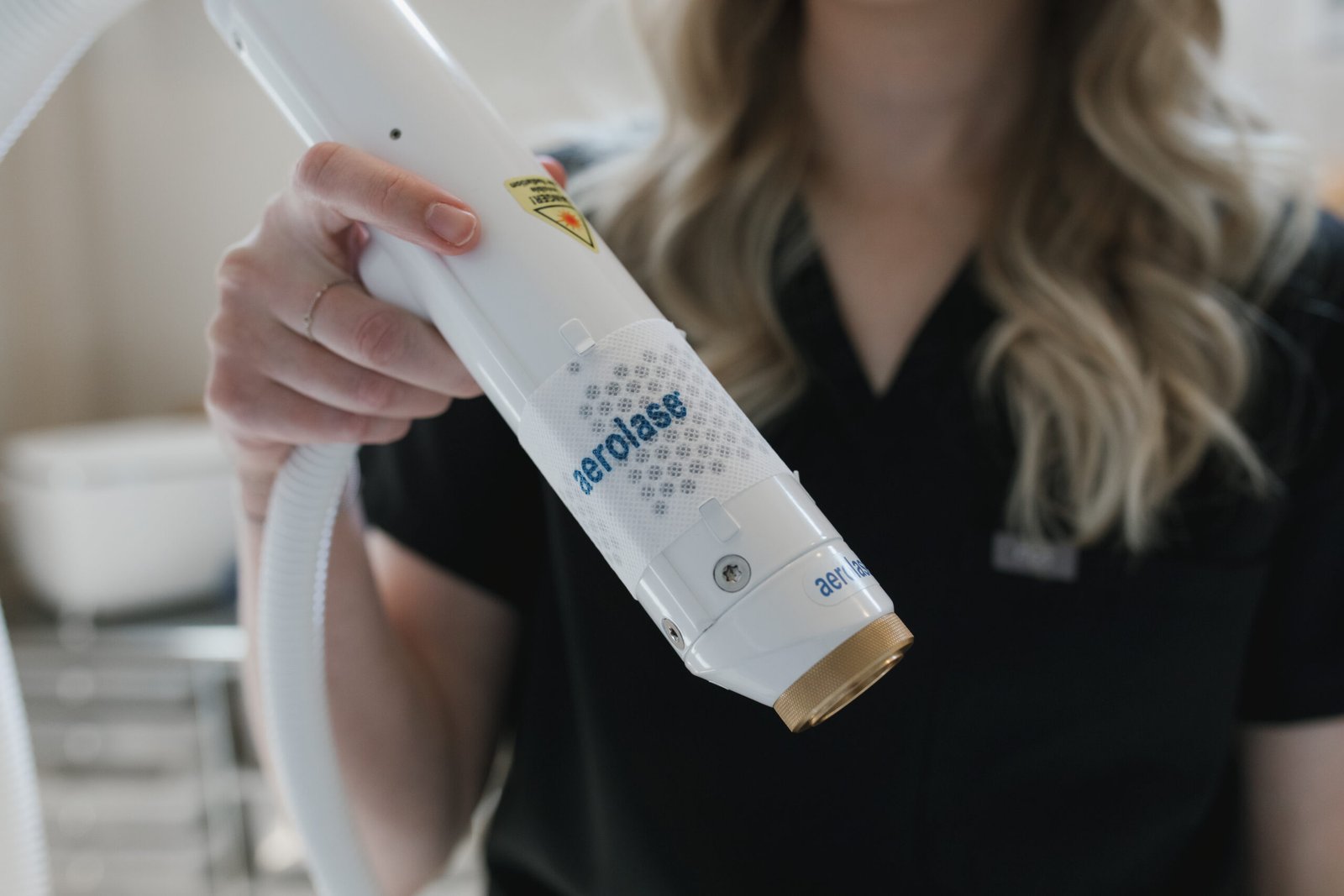
Aerolase Neo Elite
Our workhorse for melasma. Its ultra-short pulse delivers energy without the bulk heating that flares pigment, and because it doesn't chase melanin the way older devices do, it's safe across every skin tone.
Targeted Chemical Peels
Melasma-appropriate peel formulations that lift surface pigment and speed turnover without provoking the inflammation that drives rebound. Conservative depth, spaced properly.
Prescription Topicals & Mineral SPF
The part that does the heaviest lifting. Pigment-suppressing actives adjusted at every visit, plus tinted mineral SPF with iron oxides for visible-light protection.
We generally avoid aggressive ablative resurfacing and high-heat IPL on true melasma. They can look impressive at two weeks and cost you at three months — and undoing a rebound takes far longer than treating the original patch would have.
A protocol versus a one-off laser.
Melasma is the concern where the wrong single treatment does real, lasting damage. Here's the structural difference.
If someone promises to permanently remove your melasma in a single session, that's the clearest signal to keep looking. Well-managed melasma is a realistic, excellent outcome. Cured melasma isn't a thing.
What sixteen weeks looks like.
Consult and diagnosis
We examine the pattern and depth, take your hormonal and sun history, review medications that photosensitize, and map the protocol — including cost, timeline, and what maintenance will look like afterward.
Suppression only
Topicals and sun strategy go in first, with no in-office treatment yet. Many patients see softening in this phase alone, which tells us the plan is calibrated correctly.
Gentle clearing
We layer in conservative in-office sessions, spaced to let the skin settle completely between visits. Progress is gradual on purpose — fast clearing and rebound tend to travel together.
Maintenance
We step treatment down, simplify your routine to what you'll realistically keep doing, and set a seasonal check-in rhythm ahead of Denver's high-UV months.
Before & after, in our chair.
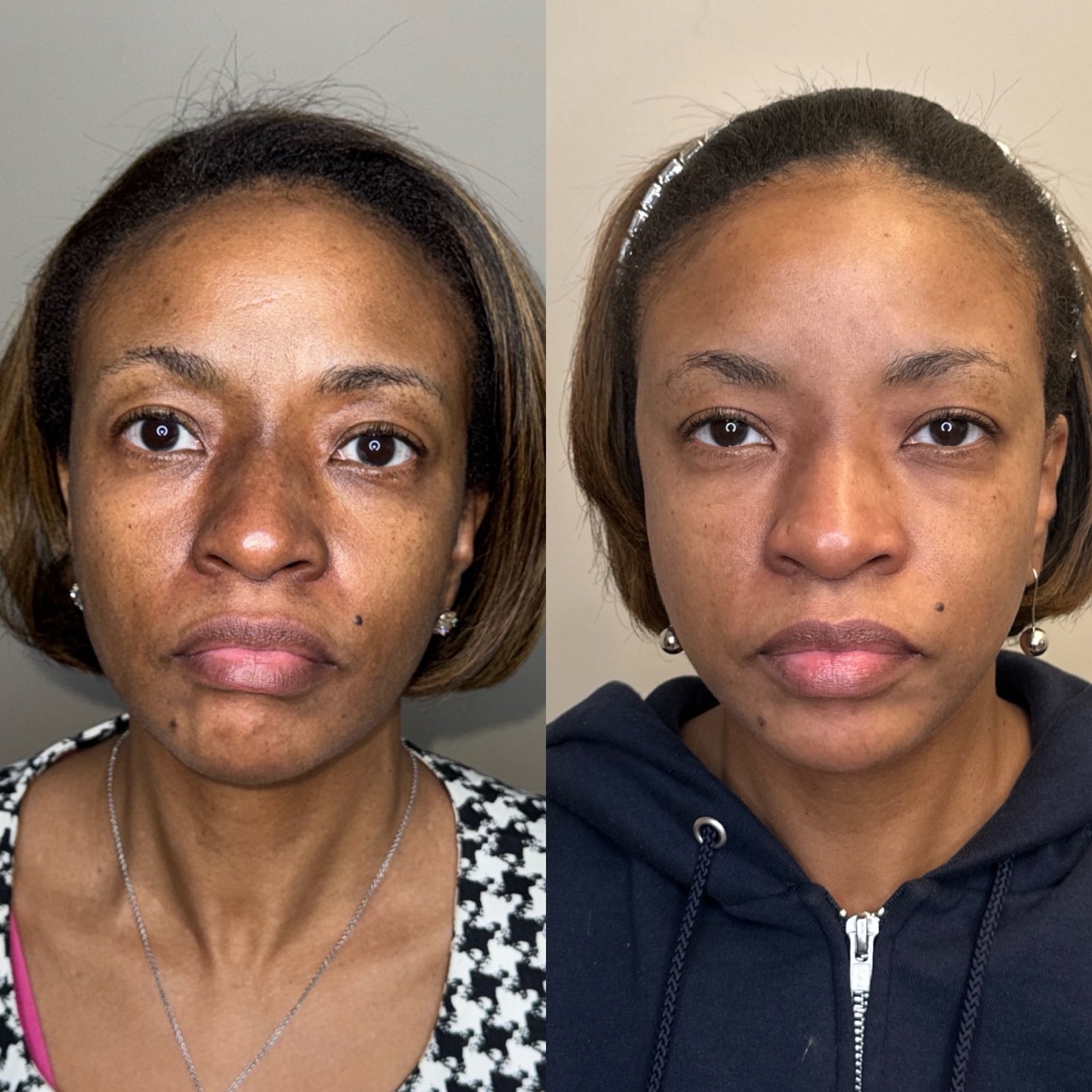
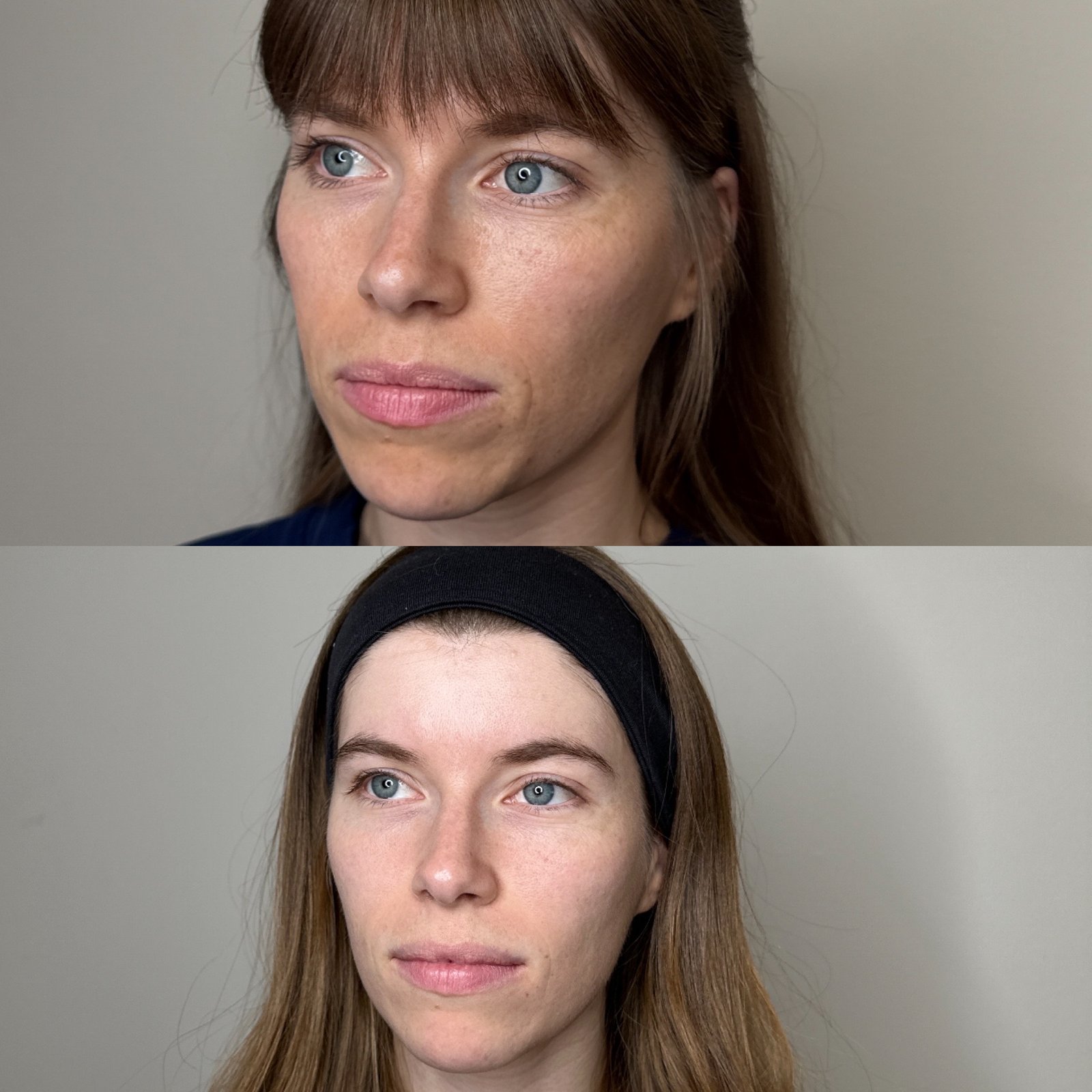
Real Skin! patients on real melasma protocols. Individual results vary — and with melasma, maintenance is part of the result.
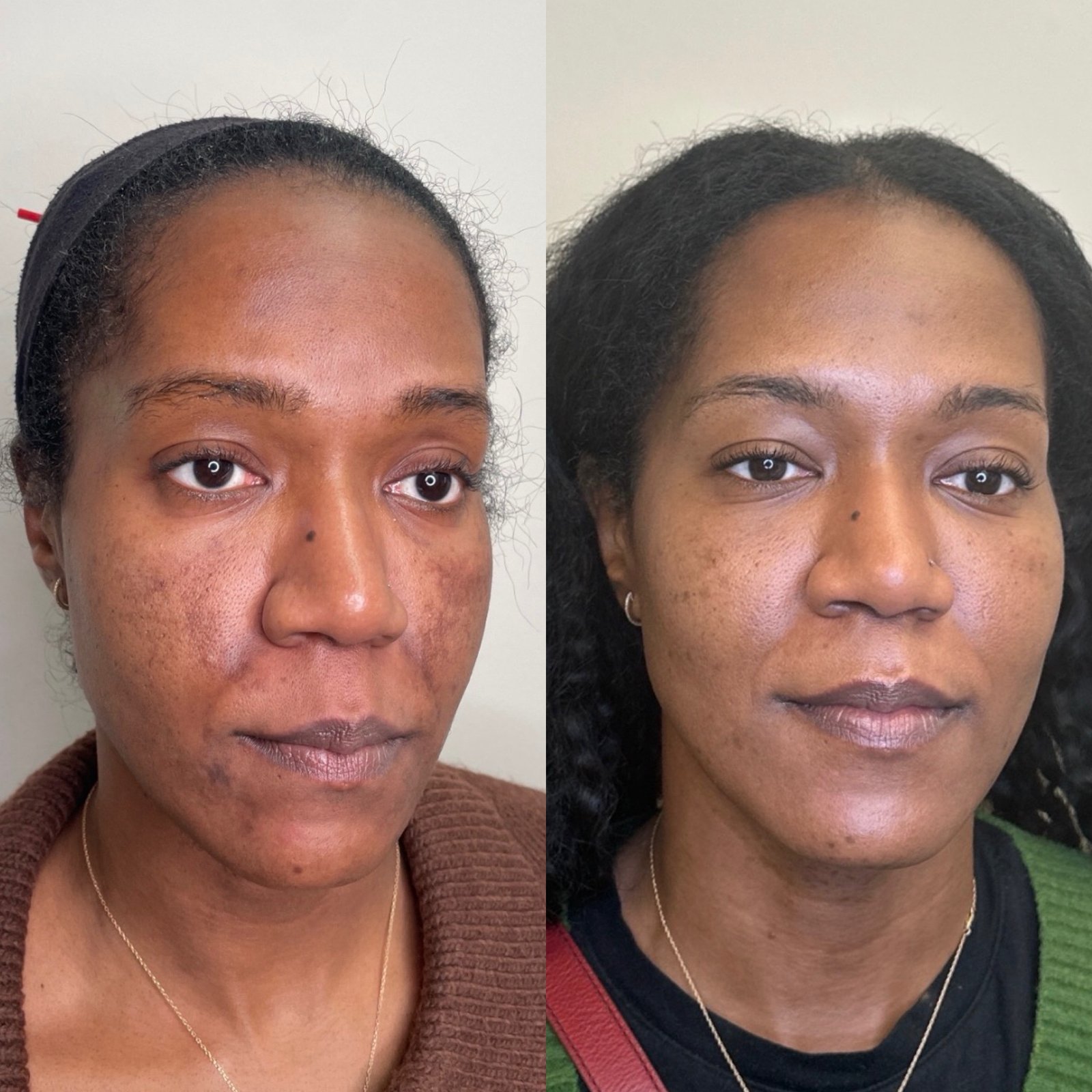
I stopped hiding — behind foundation.
“I got melasma during my second pregnancy and spent four years trying to fix it. Two different places treated it with lasers that made it worse — one of them so much worse that I wouldn’t leave the house without full coverage foundation for months afterward.
What was different here was that nobody touched my face for the first month. They explained that we had to calm the pigment down before we cleared anything, and that melasma is managed rather than cured. That honesty is the reason I trusted the rest of it.
It’s been a year. My cheeks are close to even, the shadow above my lip is gone, and I made it through a Colorado summer without losing the result. I wear tinted sunscreen and that’s mostly it now.”
The short list of big reasons.
Diagnosed before treated
Melasma and sun damage need opposite approaches.
Low-heat by design
The devices we choose don't feed the trigger.
Safe on every skin tone
Fitzpatrick IV-VI safety built in, not bolted on.
Built for altitude
Denver's UV load is planned for, not ignored.
Honest about chronic
We manage it well rather than overpromise a cure.
Maintenance you'll keep
A short routine beats a perfect one you abandon.
Pricing, made personal.
Melasma protocols vary by pattern, depth, skin tone, and how much of the plan is in-office versus at home.
Melasma is managed over a year, not cleared in a month, so we quote a full one-year plan at your consultation — in-office sessions, prescription topicals, and the maintenance phase that keeps the result. You can pay for the plan up front or pay as you go, visit by visit, whichever suits you.
Members save 10% on every treatment and on all topicals — and since melasma runs on prescription-strength skincare year round, that discount compounds quickly.
Your virtual consult is completely free — including the part where we tell you a treatment would make your melasma worse.
Book a Free Virtual ConsultEverything you're wondering.
No, and anyone telling you otherwise is overselling. Melasma is a chronic condition driven by hypersensitive pigment cells, hormones, and light exposure. What is absolutely achievable is clearing it substantially and then keeping it quiet with maintenance. Most of our patients reach a point where it is not something they think about day to day, which is the honest version of a great outcome.
Because heat is a melasma trigger. Devices that deliver a lot of bulk thermal energy, including many IPL settings and aggressive resurfacing lasers, can look like they cleared the pigment at two weeks and then provoke a rebound that is darker than where you started. Melasma needs low-heat, conservatively dialed treatment and a suppression phase first, which is why we sequence it the way we do.
Yes, when the device and settings are chosen for it. Melasma is more common and more persistent in Fitzpatrick III-VI skin, and those same skin types are more prone to post-inflammatory hyperpigmentation, so the margin for error is smaller. We use the Aerolase Neo Elite, which does not target melanin the way older pigment lasers do, and we prepare the skin before treating rather than after.
Hormonal melasma often improves once the hormonal driver changes, but it rarely resolves on its own, and the pigment that has already set tends to stay. It also has a strong tendency to return with a subsequent pregnancy or a change in hormonal contraception. We build plans that account for that rather than assuming the problem will disappear.
For melasma, yes, and specifically tinted mineral sunscreen with iron oxides. At 5,280 feet UV intensity is higher than at sea level, snow reflects it back at your face in winter, and visible light from screens and windows triggers melasma independently of UV. Sun strategy is not the boring part of the plan tacked on at the end. It is the variable that most reliably predicts whether your result holds.
Sun spots are discrete, well-defined marks from accumulated UV damage and they respond well to targeted, relatively aggressive pigment treatment. Melasma is diffuse, symmetrical, hormonally influenced, and it flares in response to heat and light. Treating melasma like sun damage is the single most common mistake we see, and it is why we confirm the diagnosis before touching it.
Sometimes. For moderate to severe melasma, oral tranexamic acid, usually shortened to TXA, is one of the most effective tools available. It reduces pigment production systemically rather than just at the skin surface, which is why it often succeeds where topicals alone have stalled. It is not right for everyone, so we review your medical history carefully, particularly any clotting risk, before recommending it.
We quote a one-year plan at your consultation rather than a per-session rate, because melasma is managed across a year rather than cleared in a few appointments. The plan covers in-office sessions, prescription topicals, and maintenance, and you can either pay for it up front or pay as you go visit by visit. Your virtual consult is free, and members save 10 percent on treatments and topicals.
Let's quiet it down.
Book a free virtual consult at Skin! Medical Aesthetics in Denver. Send a few photos, tell us what you've already tried, and we'll come back with a real melasma plan — timeline, cost, maintenance, and all.